Stretch marks
Stretch marks are blended into the colour of the surrounding skin.
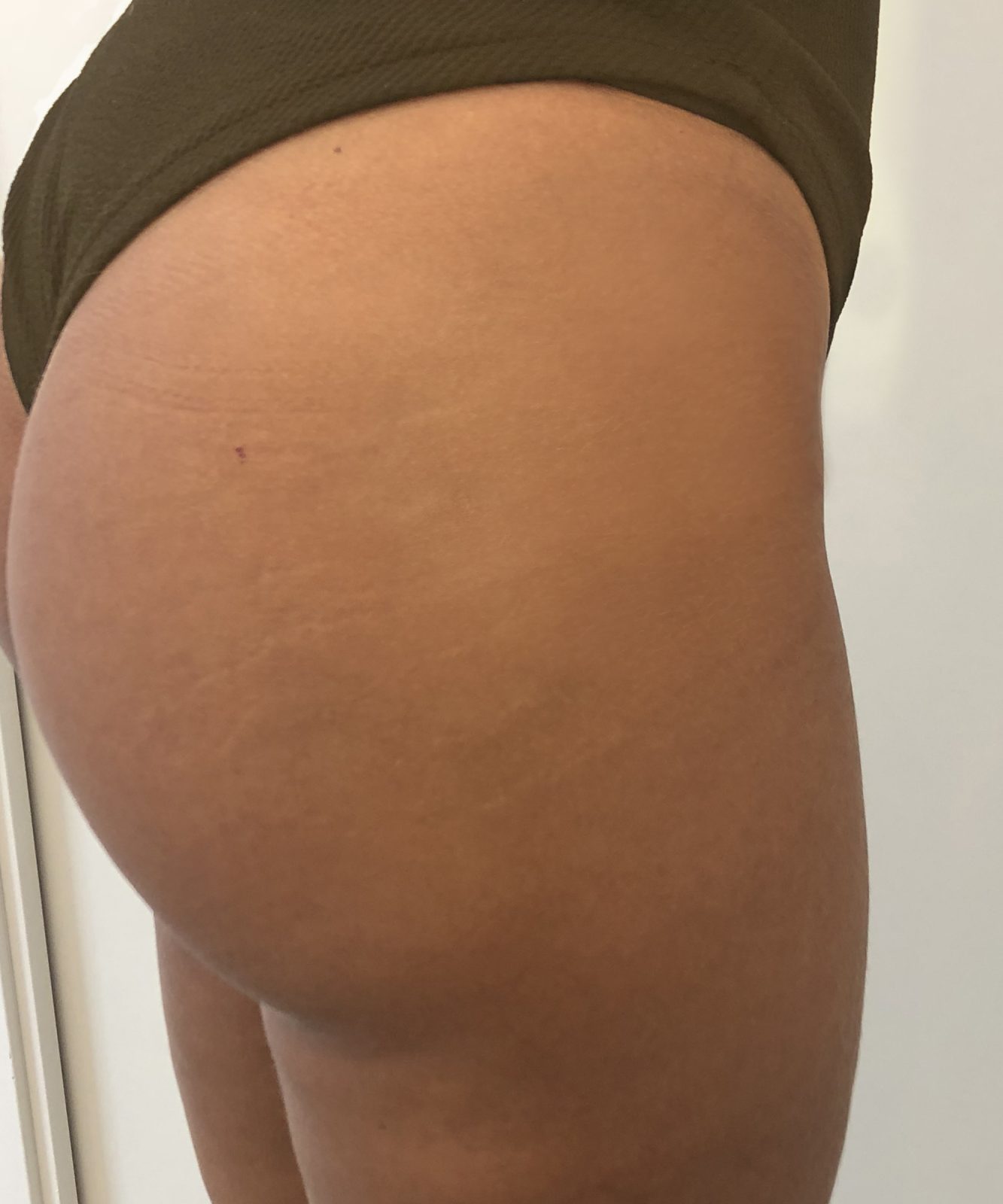 After
After
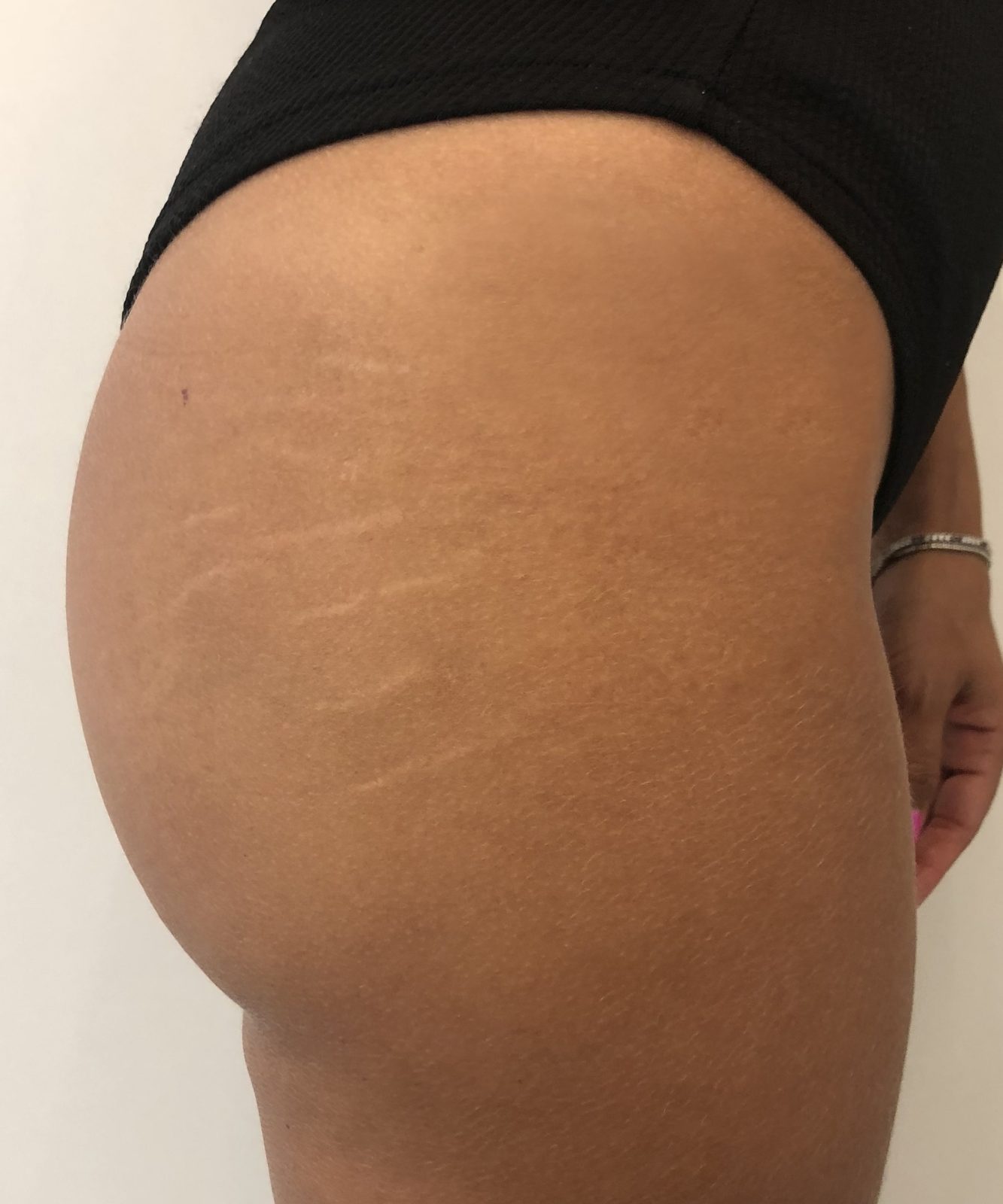 Before
Stretch mark dermopigmentation
For years people have been looking for a miracle cure for one of the imperfections women find hardest to live with: stretch marks. Real answers are few, and those that exist are often disappointing. Creams, lasers, massage and other treatments soon reach their limits with old, white and sometimes irreversible stretch marks.
Stretch marks, or striae distensae, appear mainly on the buttocks, breasts, thighs and abdomen. They form in the dermis, a connective tissue rich in elastin, which keeps the skin elastic, and in collagen, which provides support. When someone loses a lot of weight or during pregnancy, when the skin is under great strain, the collagen fibres break; the damage reaches the epidermis above and creates reddish streaks.
So new stretch marks are red, but over time the tissue scars, blood flow decreases and they turn white.
Alongside natural products such as argan, jojoba and rosehip oil, there are treatments such as fractional CO2 laser, excimer laser and microdermabrasion; among the most effective are collagen needling and dermopigmentation.
In collagen needling, a single-use needle on a dermograph creates micro-injuries in the dermis to stimulate collagen production and tighten the stretch mark. Several sessions are needed, each preceded by a test to check how the skin responds. Dermopigmentation, on the other hand, improves the appearance by colouring the stretch mark to match the surrounding skin, while the tattooing action also stimulates collagen production.
Both treatments give excellent results.
Results
3 photos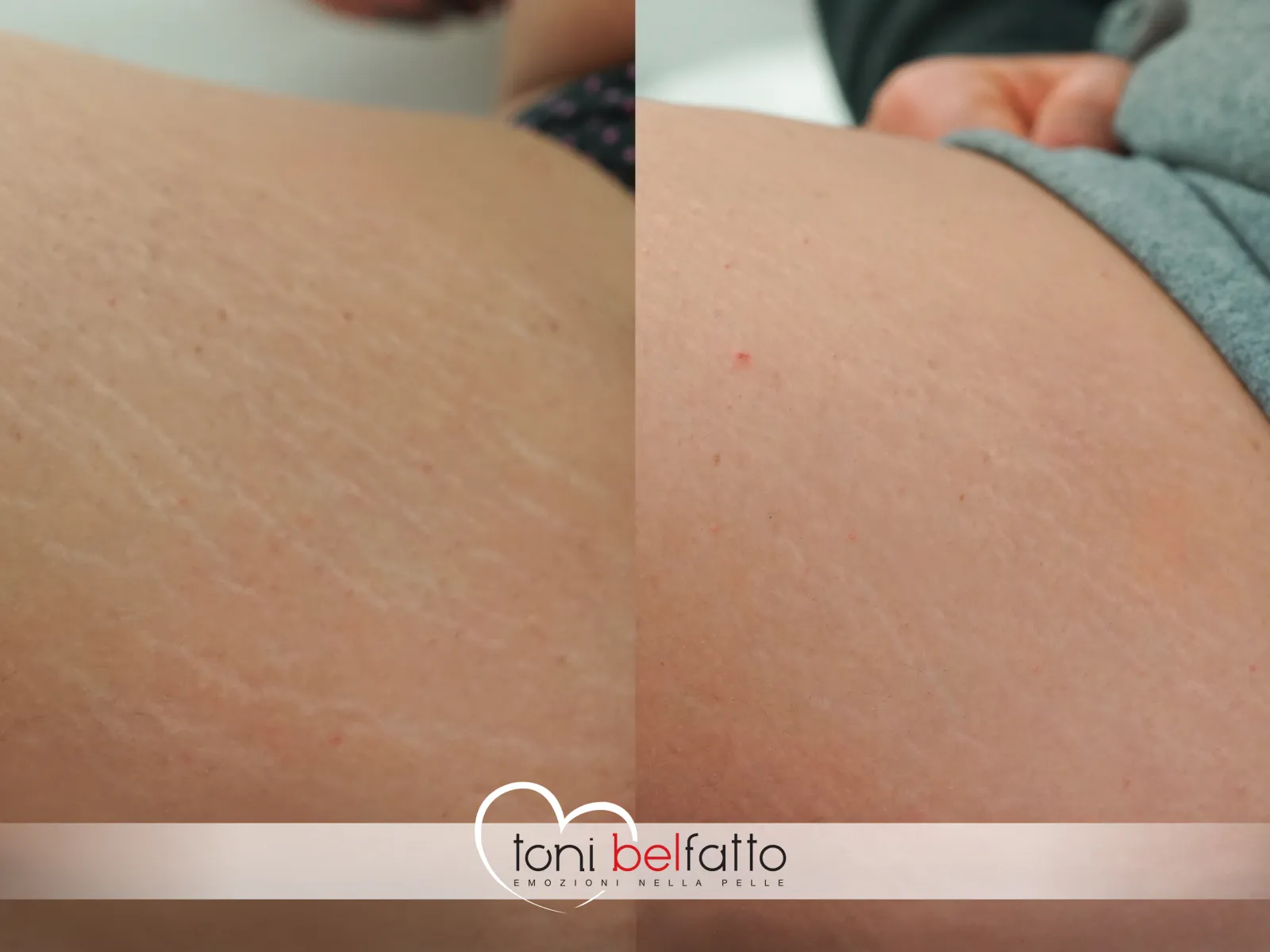
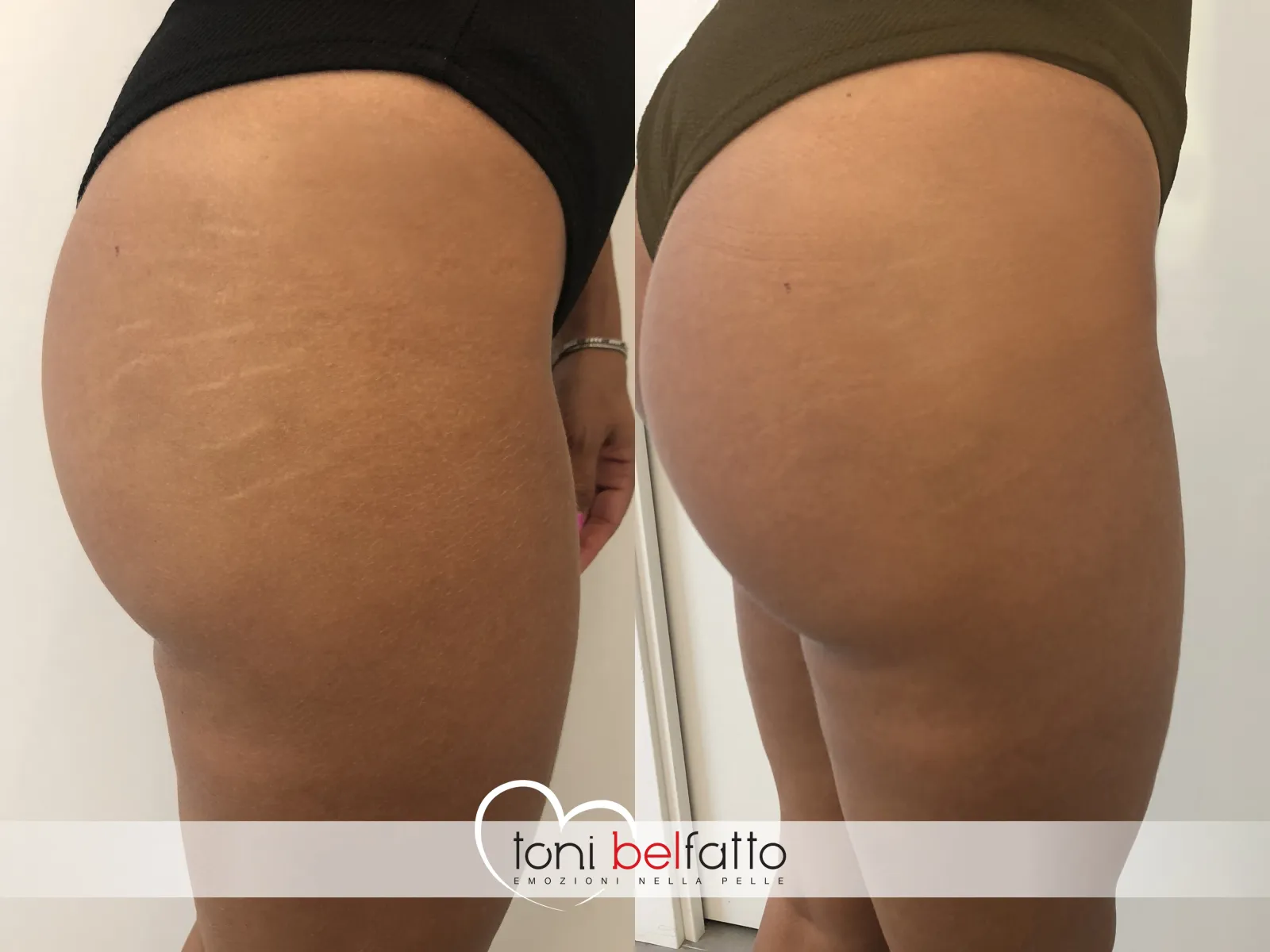
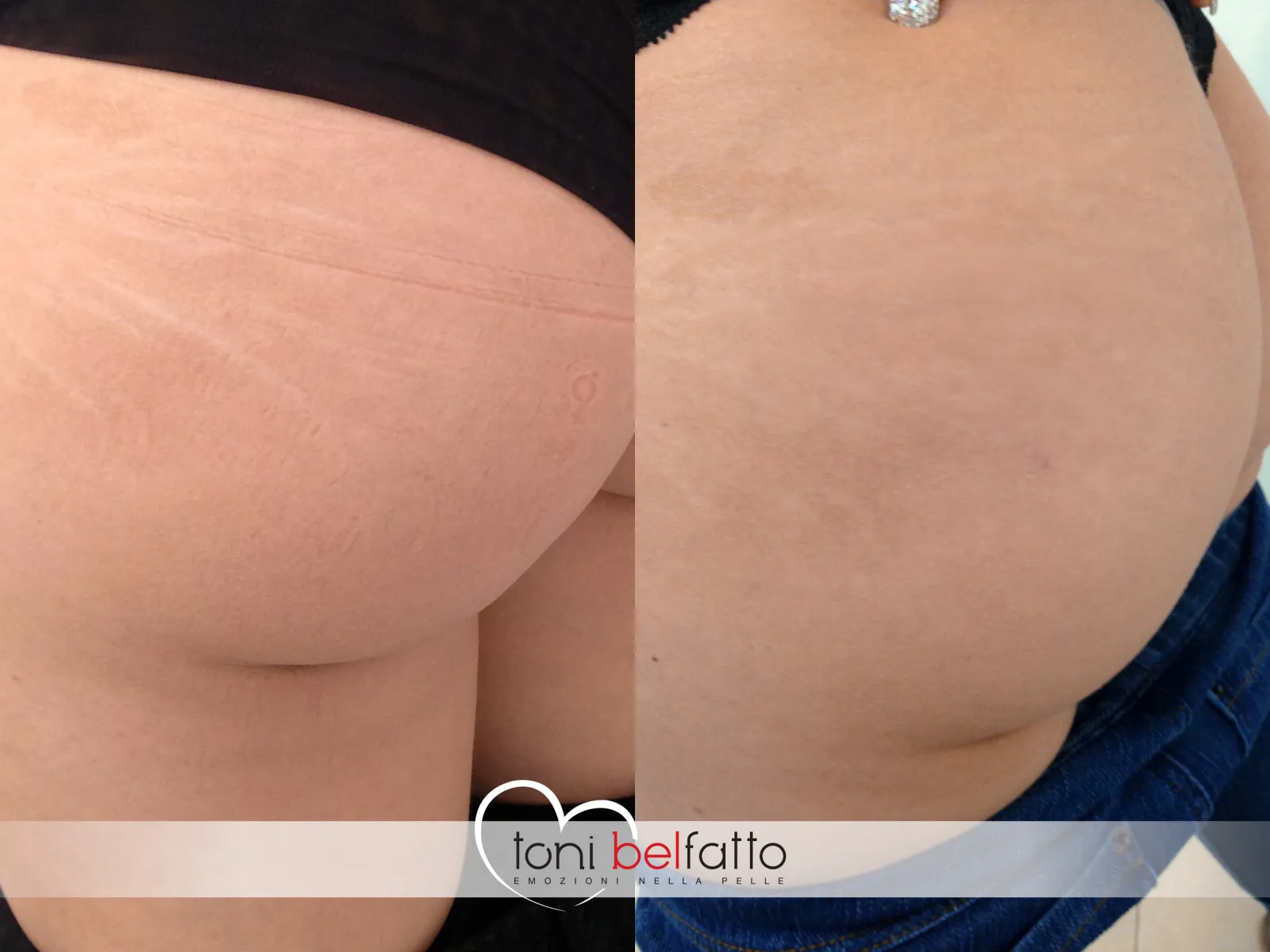
Photos from Belfatto Lab studios, published with clients' consent. Results vary from person to person.
Book a free consultation
Choose the studio and treatment: we will call you back to set the appointment.