Corrective dermopigmentation
A branch of dermopigmentation that rebuilds the areola and camouflages scars, stretch marks and vitiligo.
What is corrective dermopigmentation
Corrective dermopigmentation covers a range of treatments that fall within the broader concept of paramedical tattooing.
It often provides an excellent aesthetic answer to depigmented scars, for example after breast surgery or mastectomy. Cleft lip scars, vitiligo and facelift scars can also be greatly improved. More and more cosmetic surgeons recognise how well cosmetic surgery and dermopigmentation complement each other.
The practice has grown considerably as oncology centres, private clinics and cosmetic surgeons increasingly ask to work with dermopigmentation specialists.
It also offers psychological support to people who turn to paramedical tattooing after illnesses or aggressive treatments that have caused partial or total hair loss.
The most common applications
The field is very broad and mainly paramedical: here are the most frequent cases.
Dermopigmentation for pigment spots and vitiligo
It may seem odd to partially colour the skin with a substance that can neither darken nor lighten, yet aesthetic dermopigmentation is a solution for people with visible pigmentation disorders: hyperpigmented and hypopigmented patches and vitiligo. When dermatological treatments are not enough, dermopigmentation can soften the patches of stable vitiligo, after the dermatologist's opinion. The aim is to even out the area. Depending on how extensive the vitiligo and the depigmented patches are, the practitioner may choose resorbable or permanent pigments, sometimes even an artistic tattoo.
Dermopigmentation for stretch marks
Paramedical dermopigmentation is also used on stretch marks, which increasingly affect areas of the body subject to changes in volume and therefore to stress on the skin. The technique repigments the area to match the surrounding skin, reducing the unsightly effect and the difference in colour. Where resorbable pigments do not give the desired coverage, permanent pigments with a decorative tattoo may be advised.
Scar dermopigmentation
Paramedical dermopigmentation is an effective solution for one of the most common skin imperfections: scars. The result depends largely on the condition of the scar tissue – the smoother and flatter the area, the better the illusion.
Aesthetic dermopigmentation can treat, among others, appendectomy scars, cleft lip scars, general surgical scars, traumatic scars, facelift and liposuction scars and hair transplant scars (see Tricopigmentation).
Areola dermopigmentation
Dermopigmentation is one of the most frequently requested treatments for partial or total reconstruction of the areola.
Areola dermopigmentation can be used for many breast imperfections: periareolar scars after breast augmentation, inverted "T" scars after a breast lift, oval scars left by drainage tubes, areola scars after mastectomy (with reconstruction of one or both areolas), pale areolas (with repigmentation) and small areolas (with enlargement). Only in rare cases can this work be done with permanent pigments.
Areola reconstruction
Three-dimensional reconstruction of the areola and nipple after mastectomy.
Learn more →Vitiligo
Light patches from stable vitiligo are recoloured to match the natural skin tone.
Learn more →Scars
Scar camouflage with skin-coloured pigments.
Learn more →Stretch marks
Stretch marks are blended into the colour of the surrounding skin.
Learn more →Results
11 photosShow clinical images
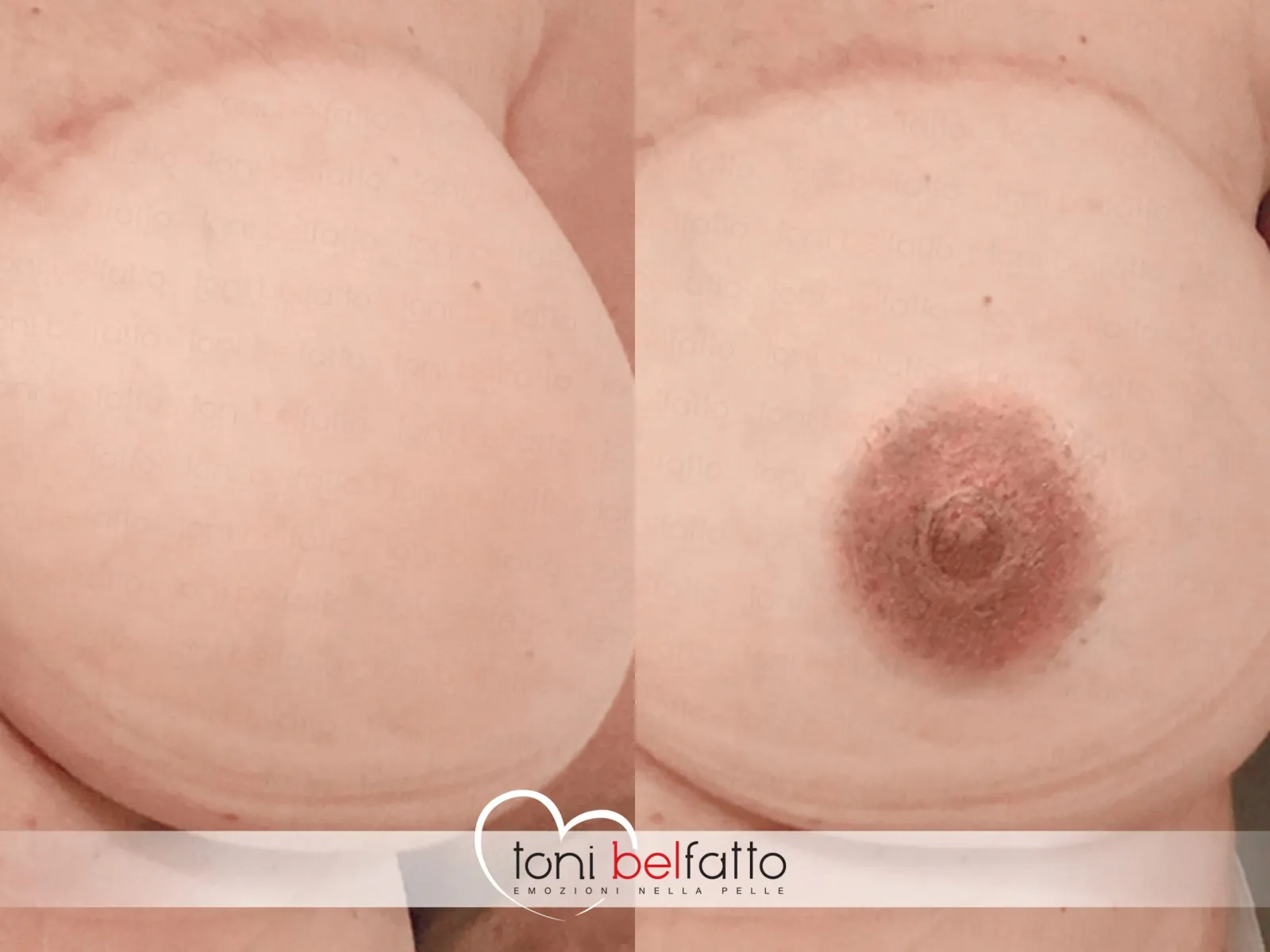
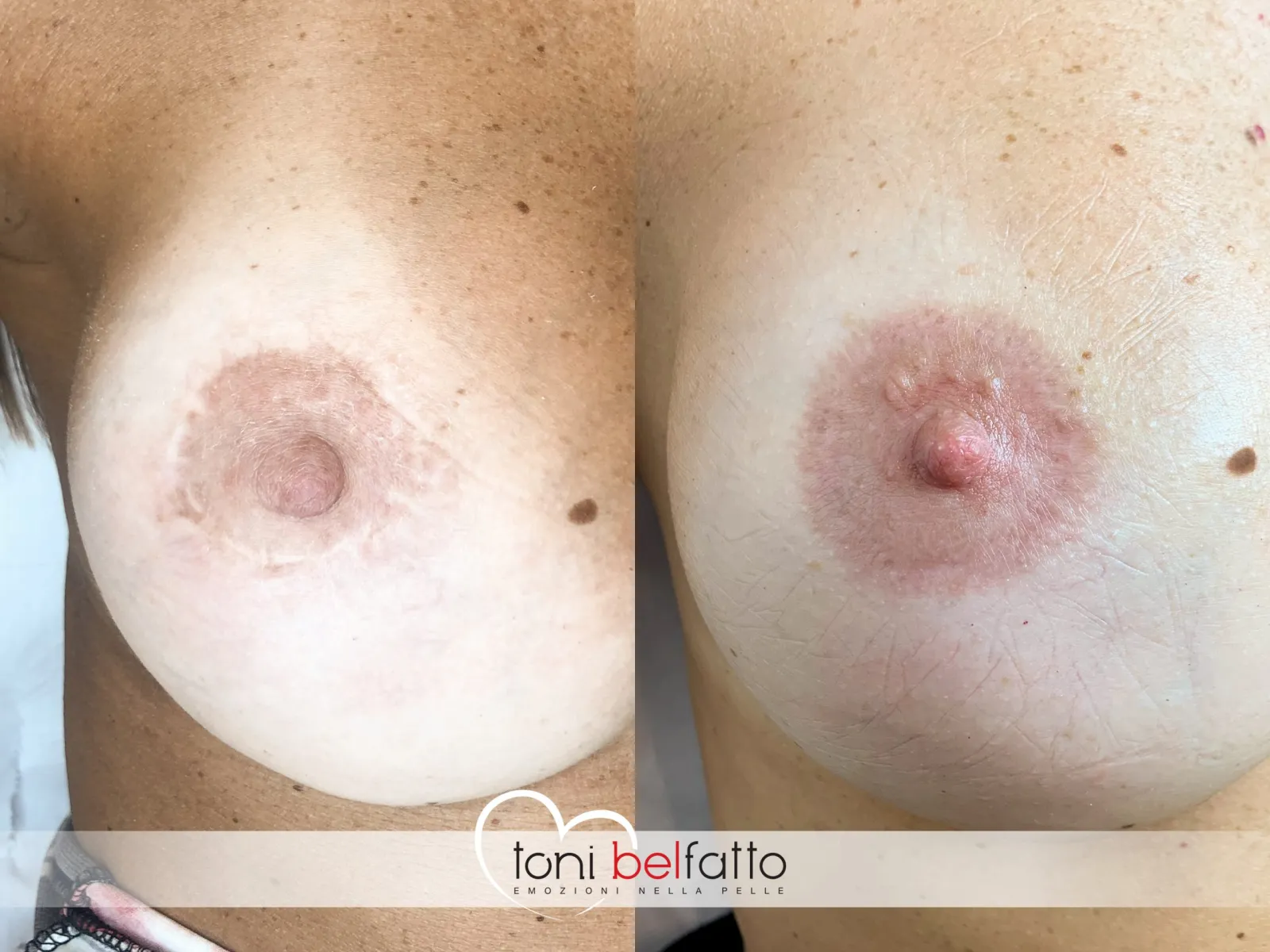
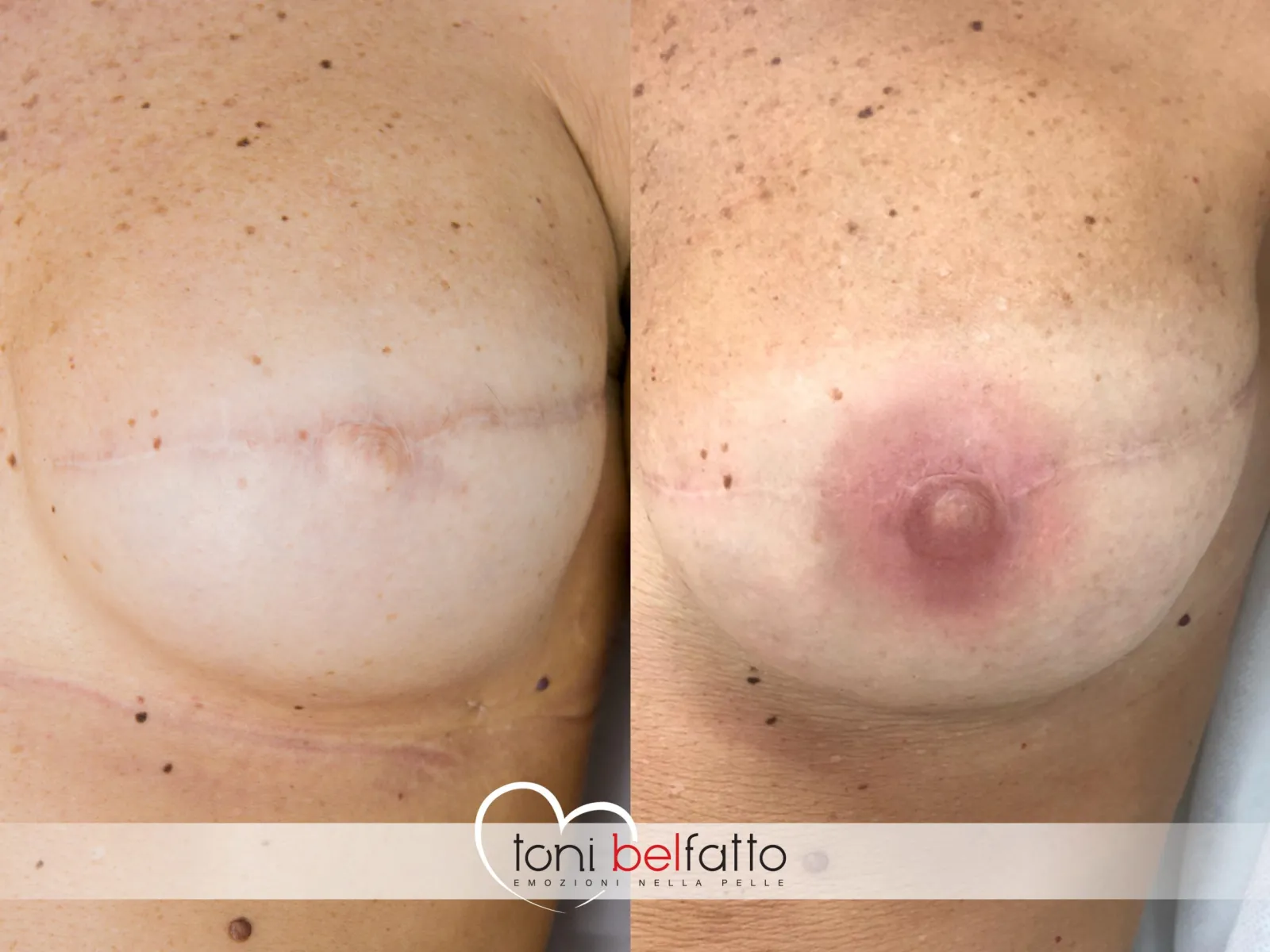
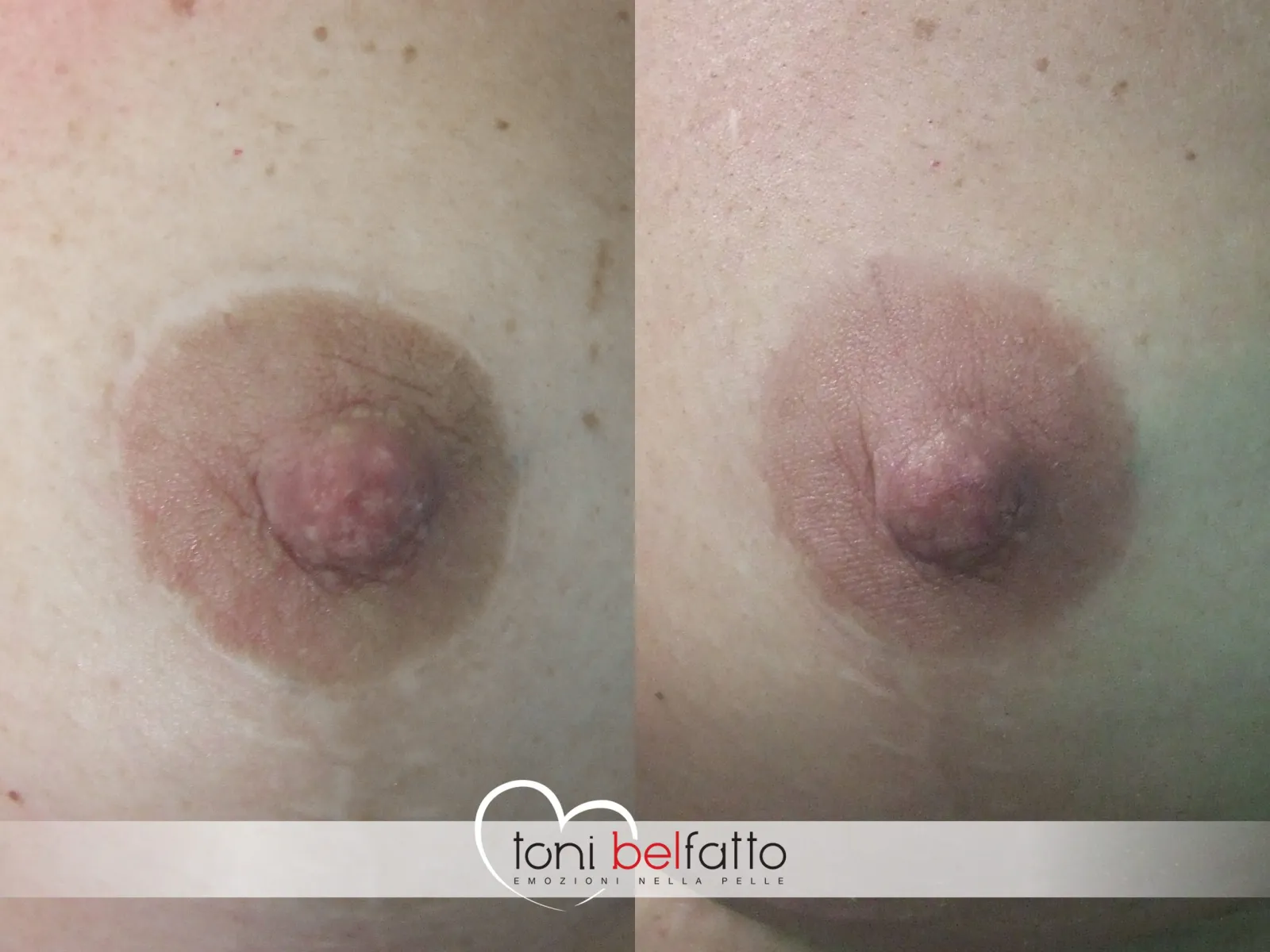
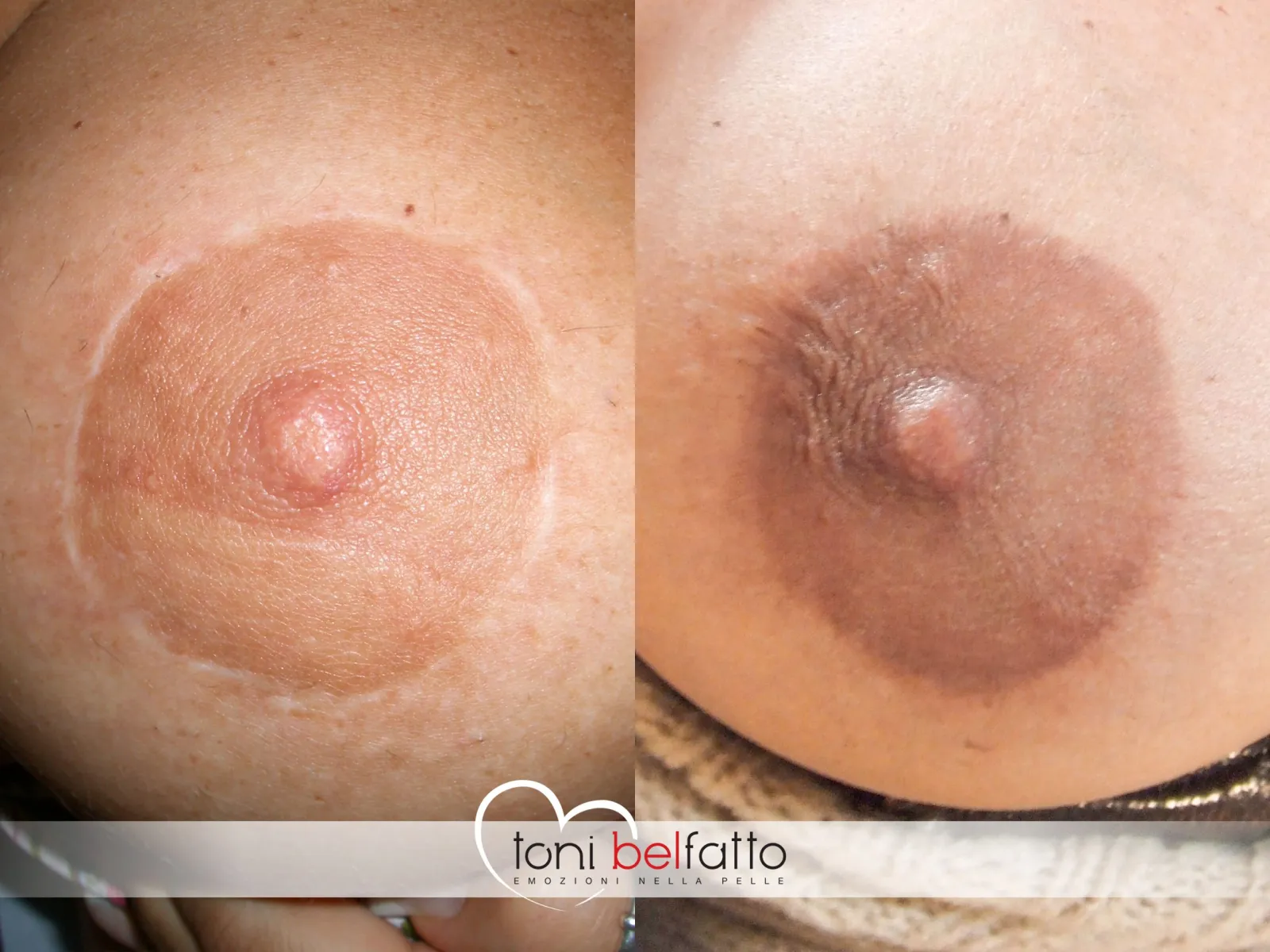
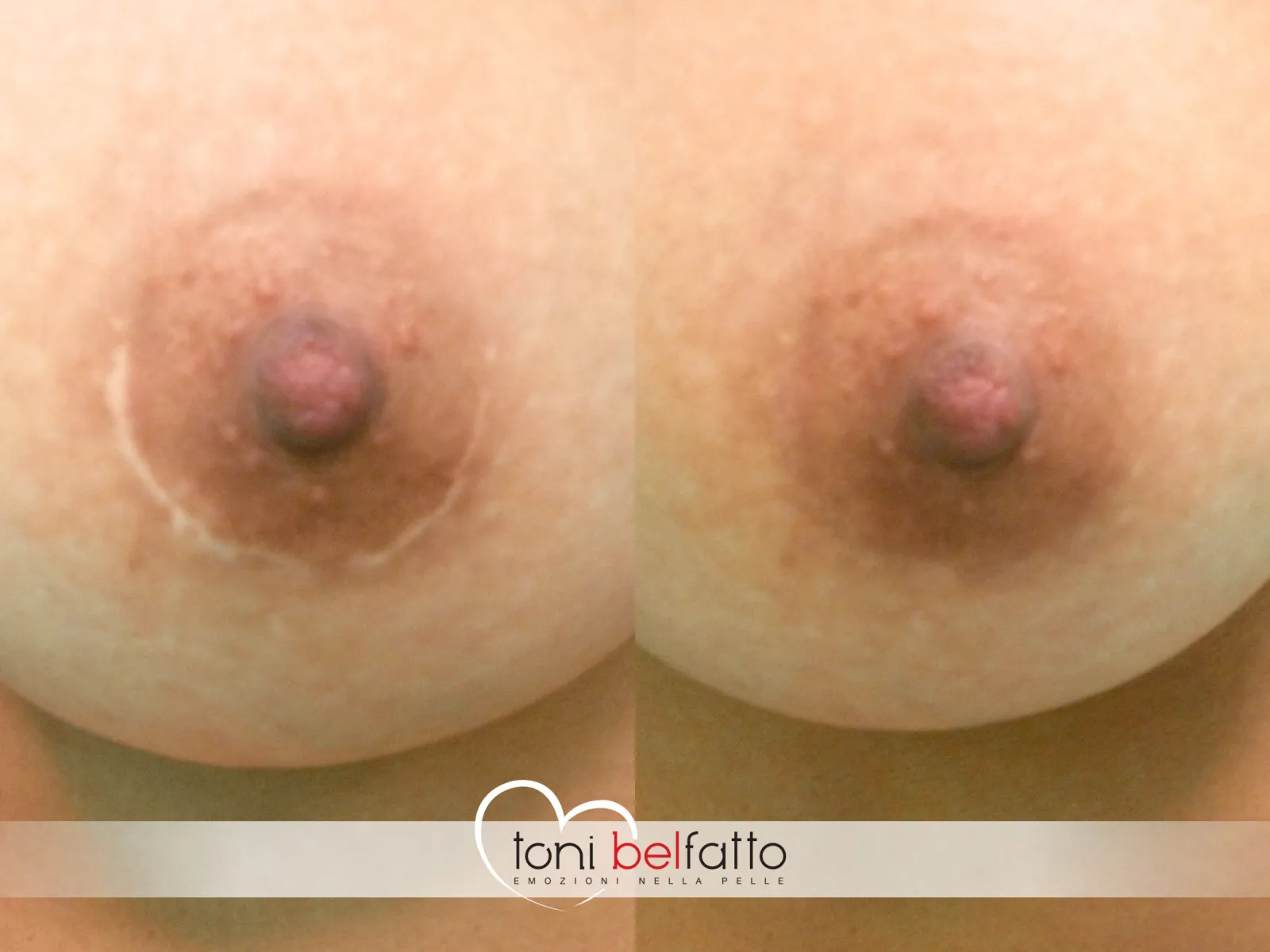
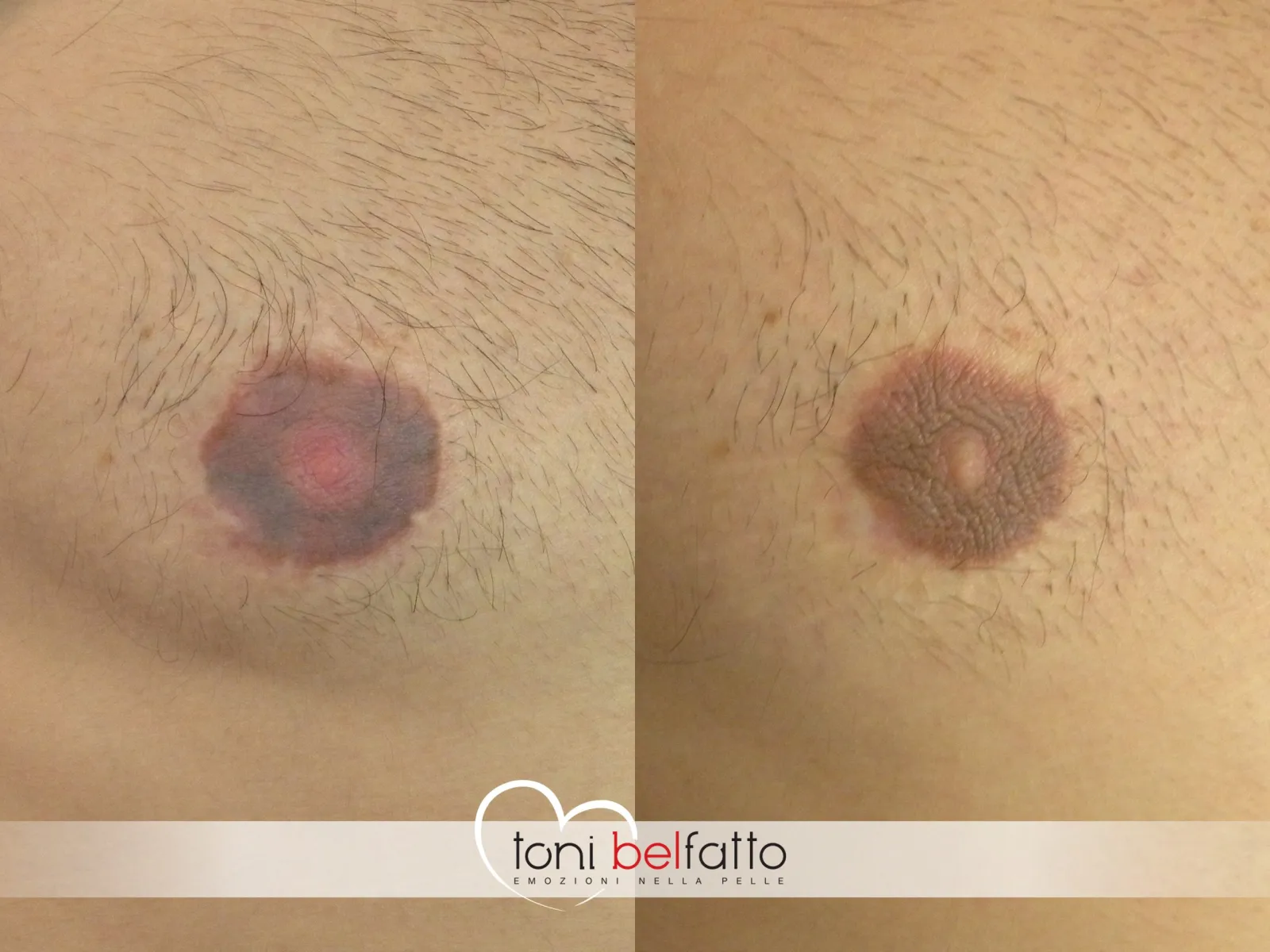
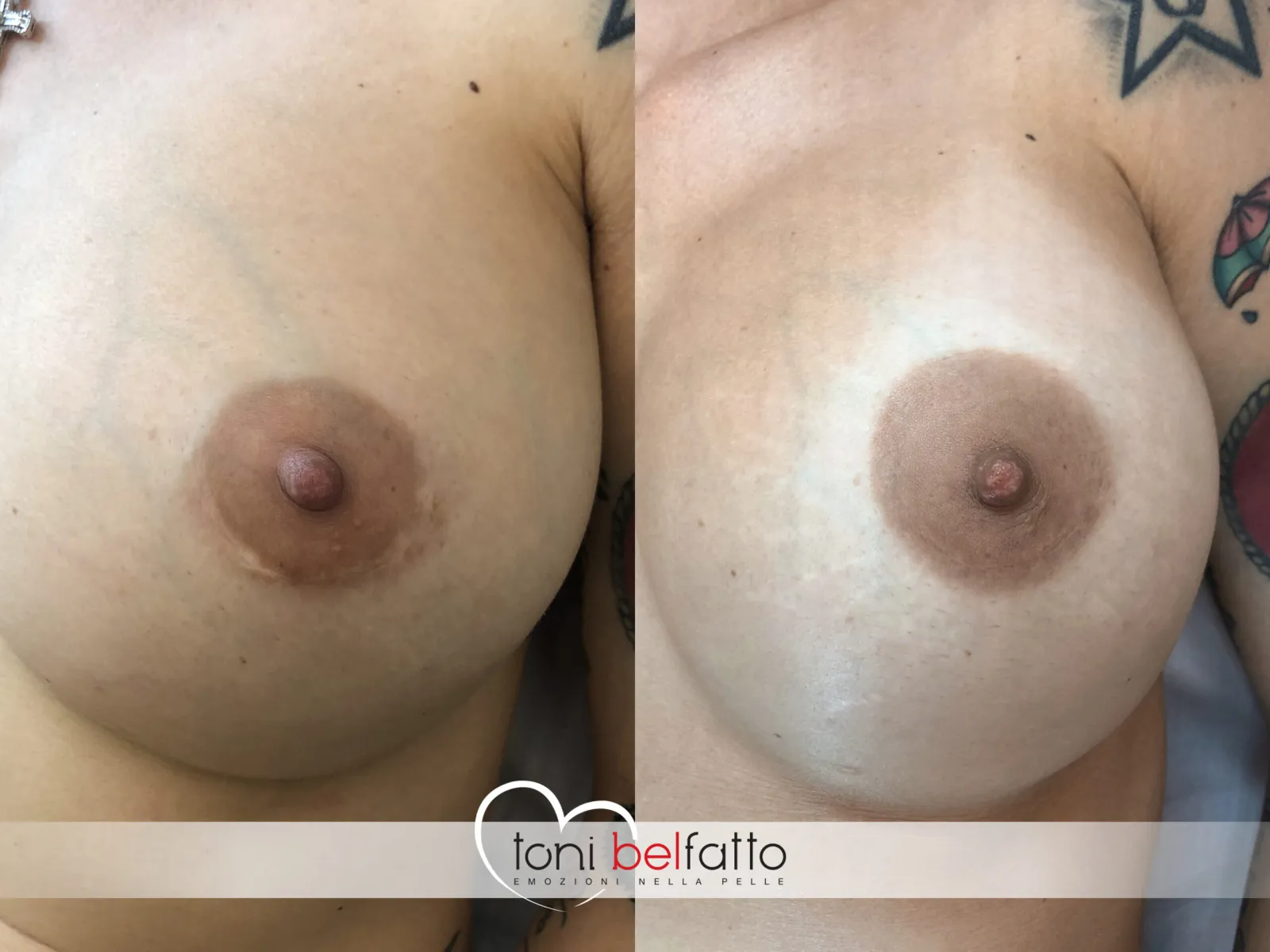
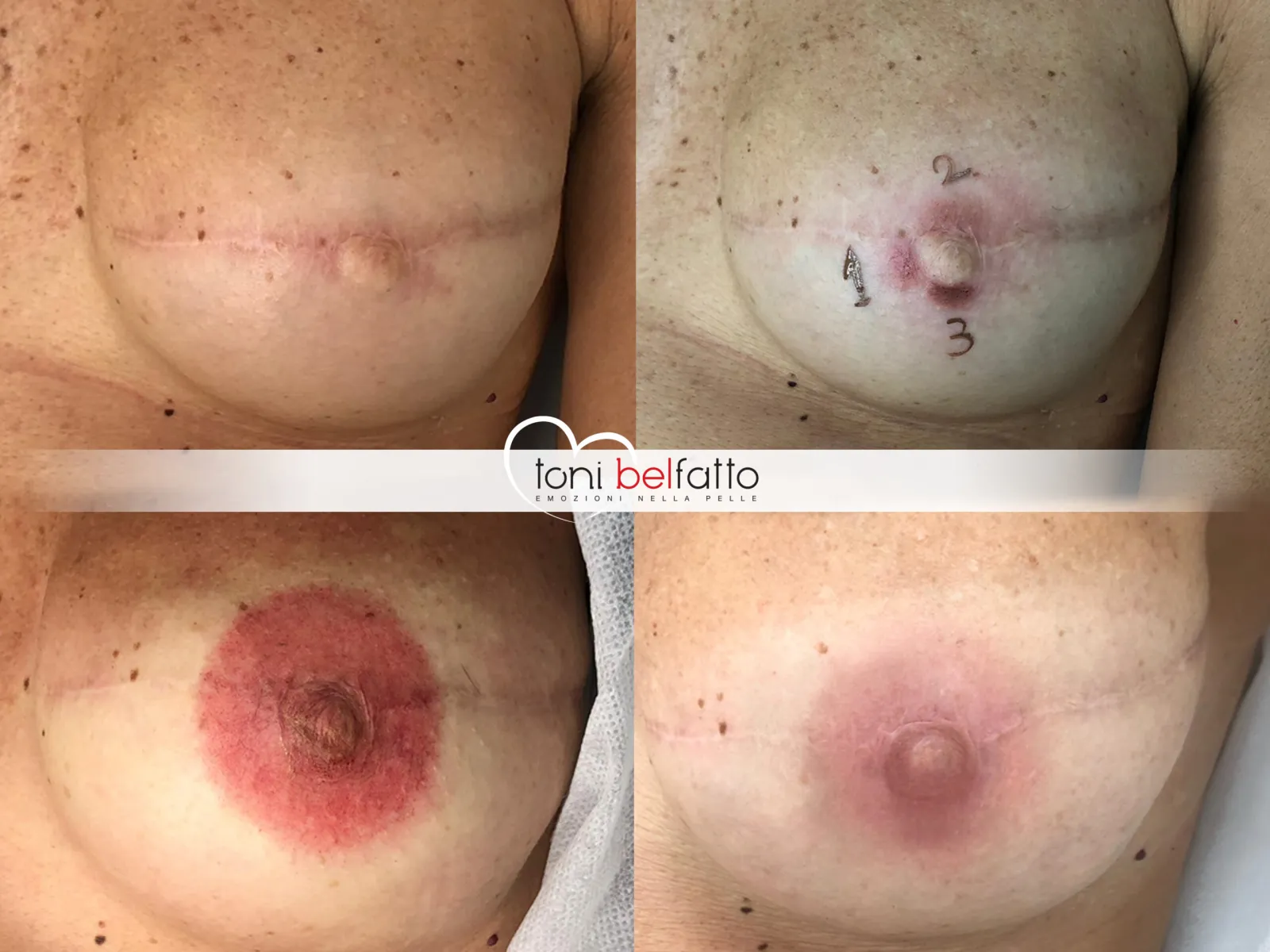
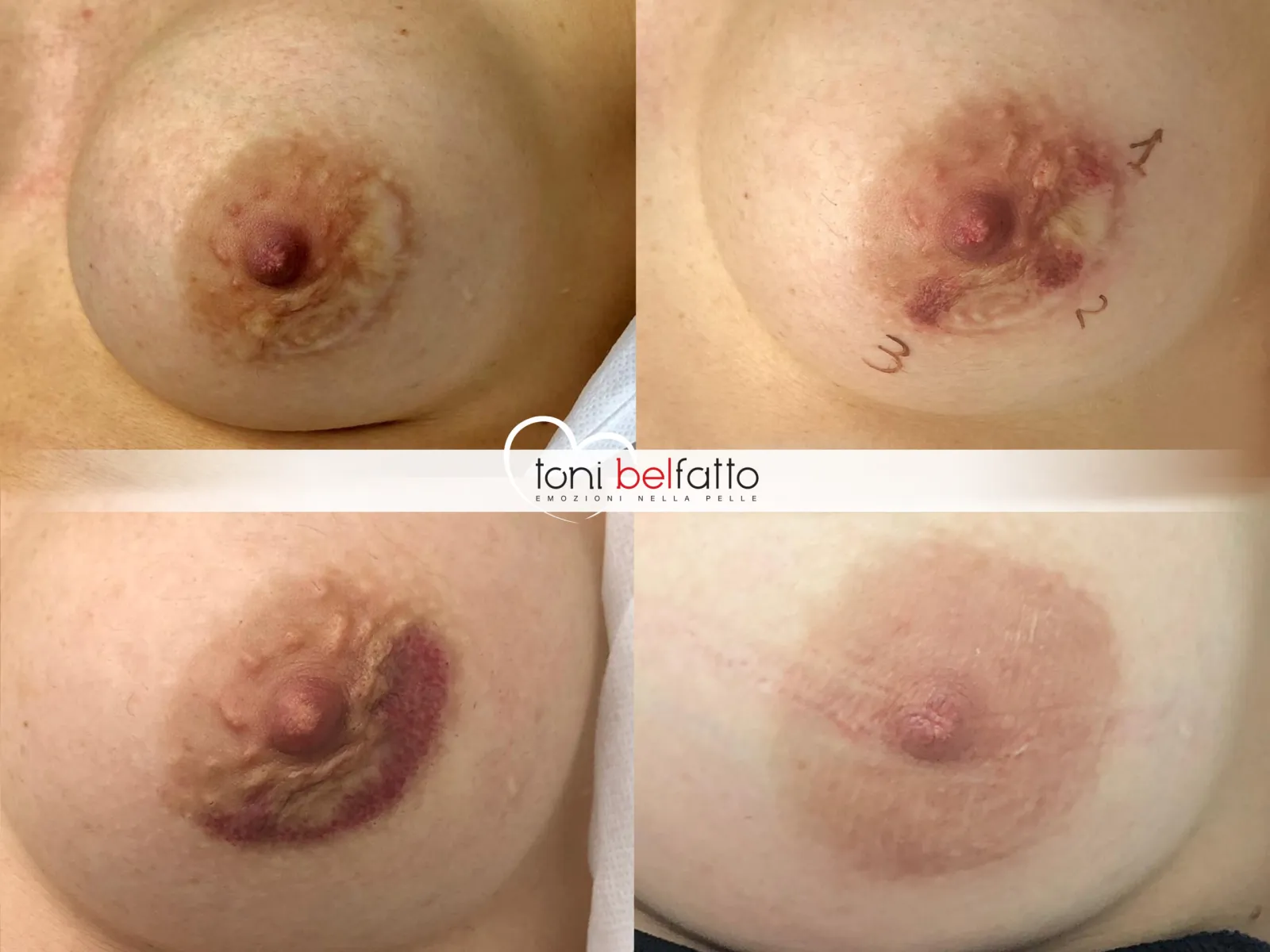
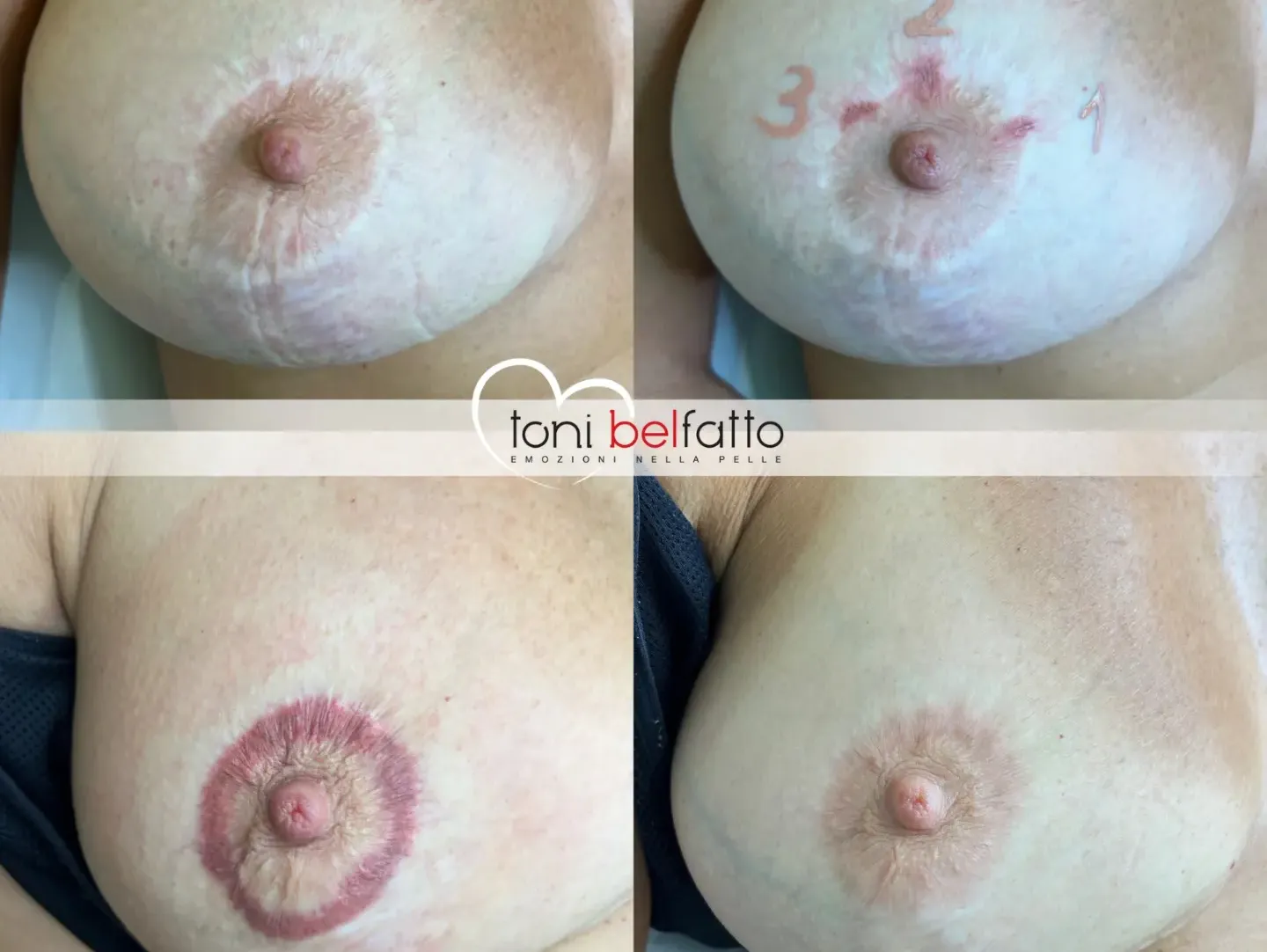
Photos from Belfatto Lab studios, published with clients' consent. Results vary from person to person.
Book a free consultation
Choose the studio and treatment: we will call you back to set the appointment.